
Natural Dyeing Textile Manipulation
The Ask
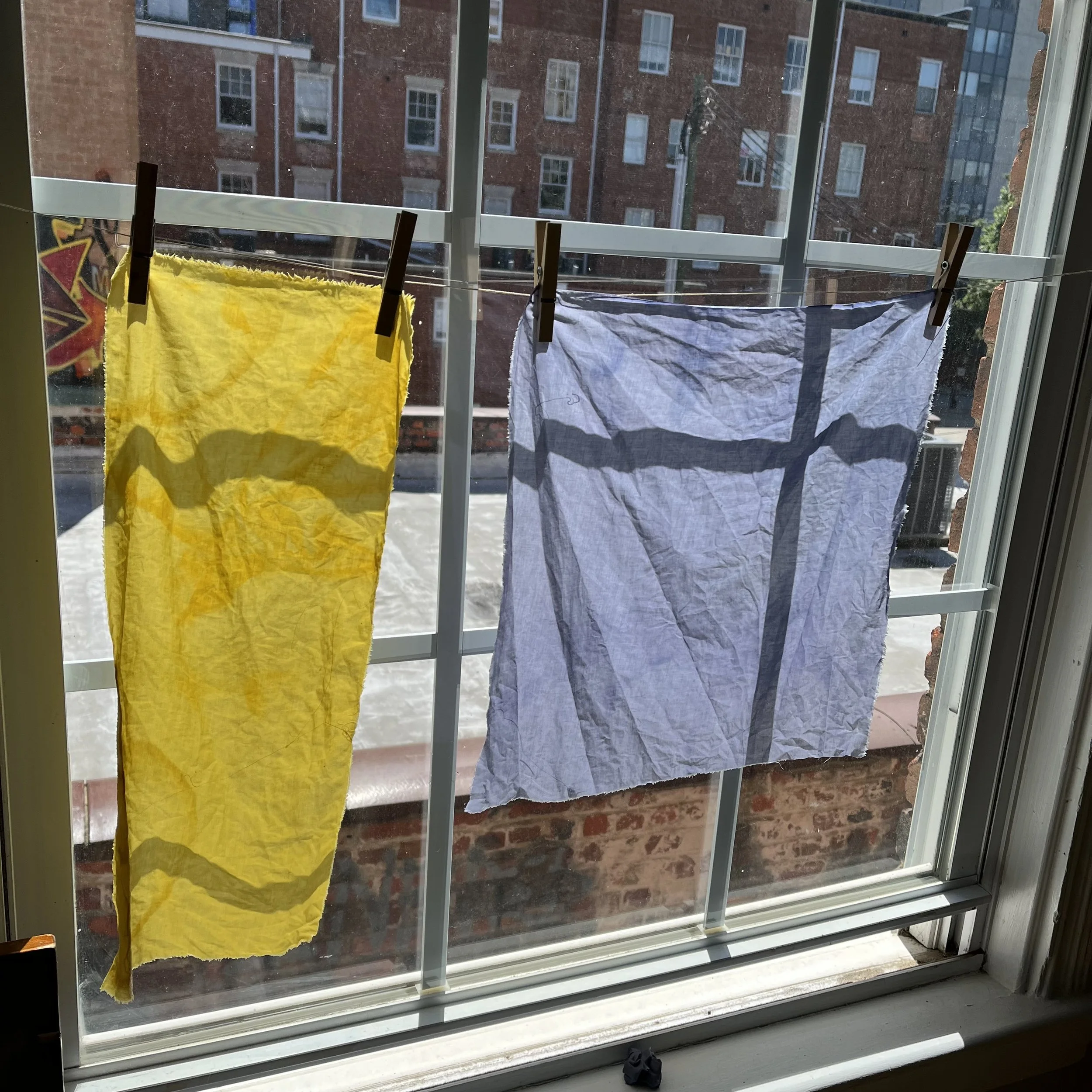
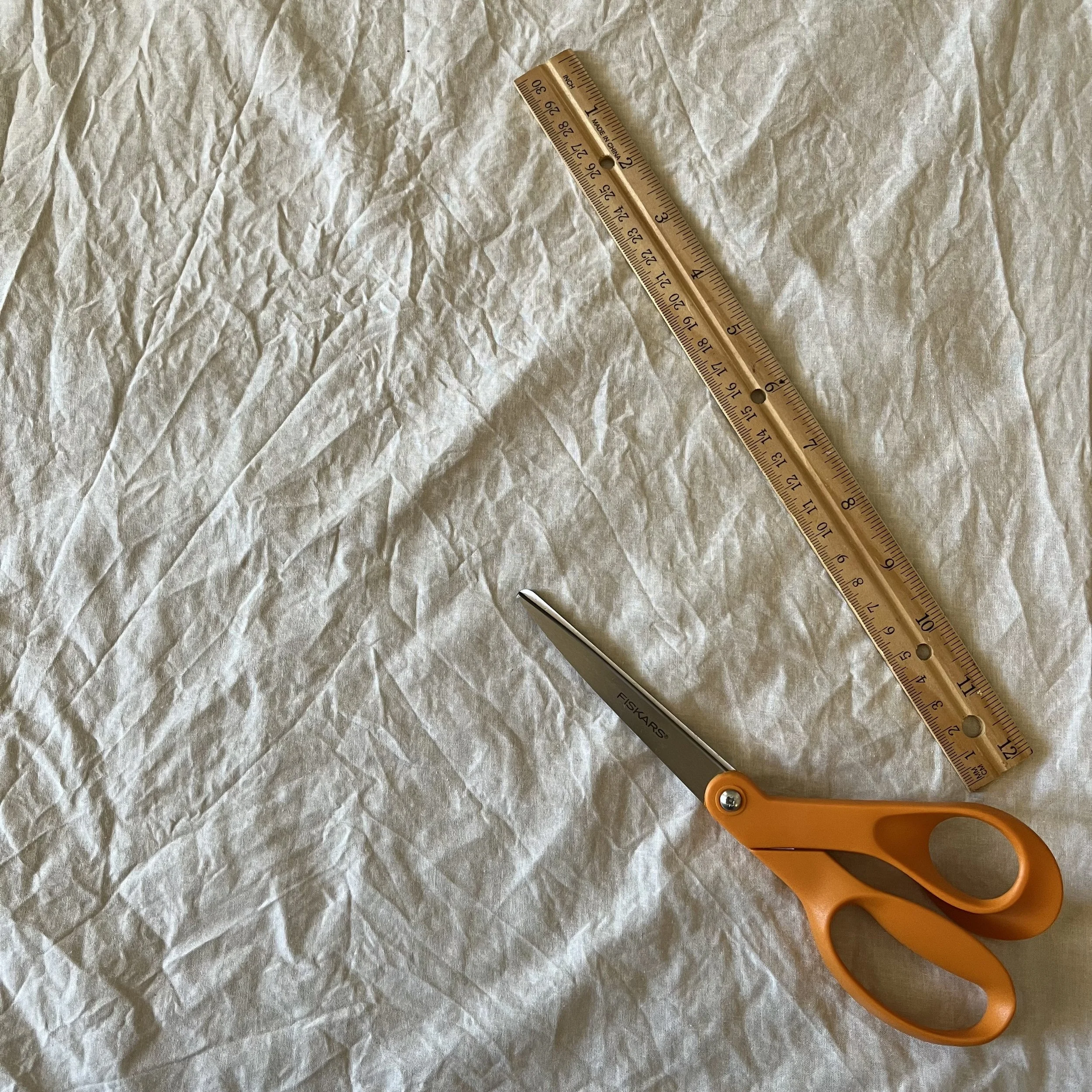
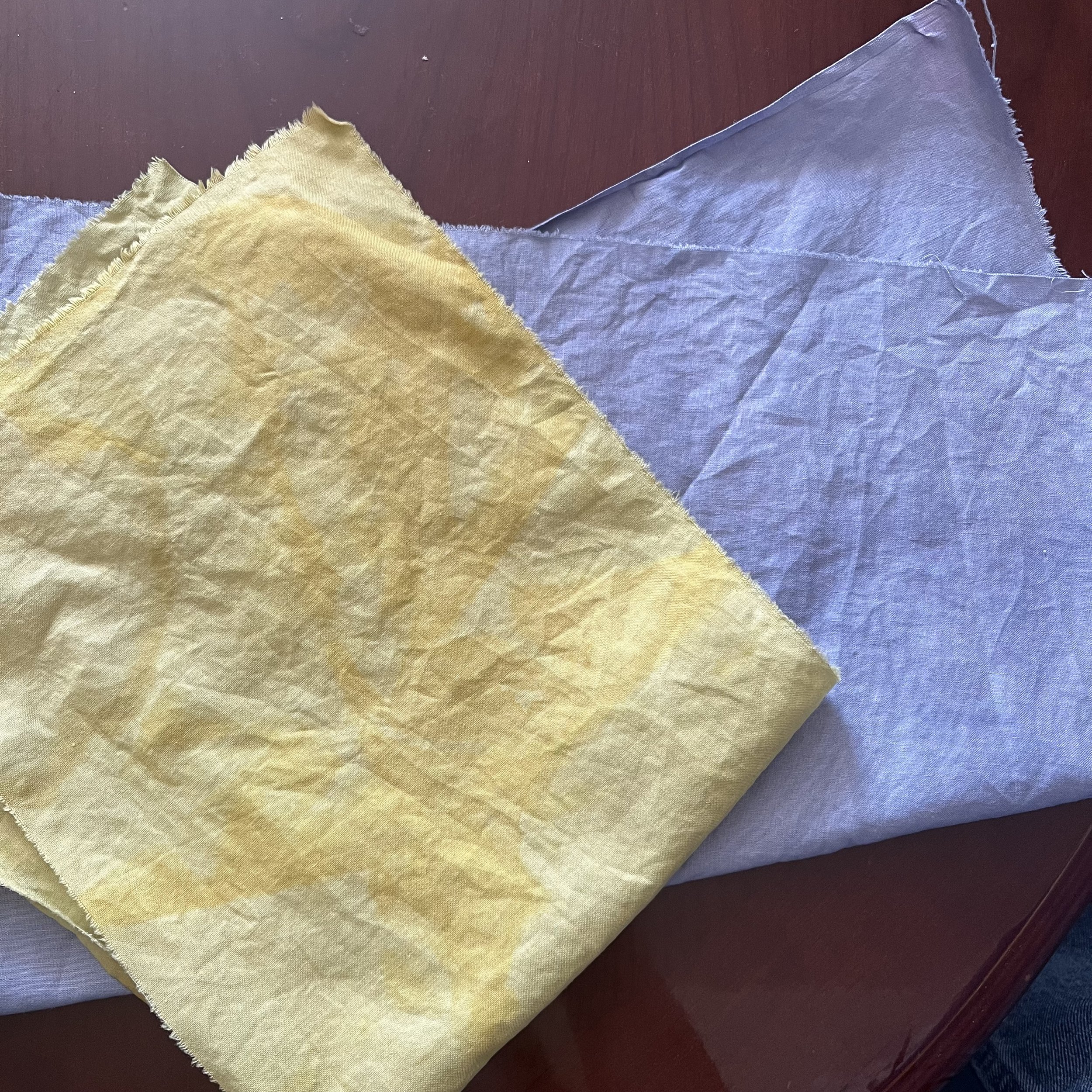
For this assignment, I was asked to manipulate a piece of cotton muslin using any technique that would meaningfully alter the textile. I chose to explore natural dyeing and simple hand embroidery to show color variation and surface connection.
Materials
-
Supplies
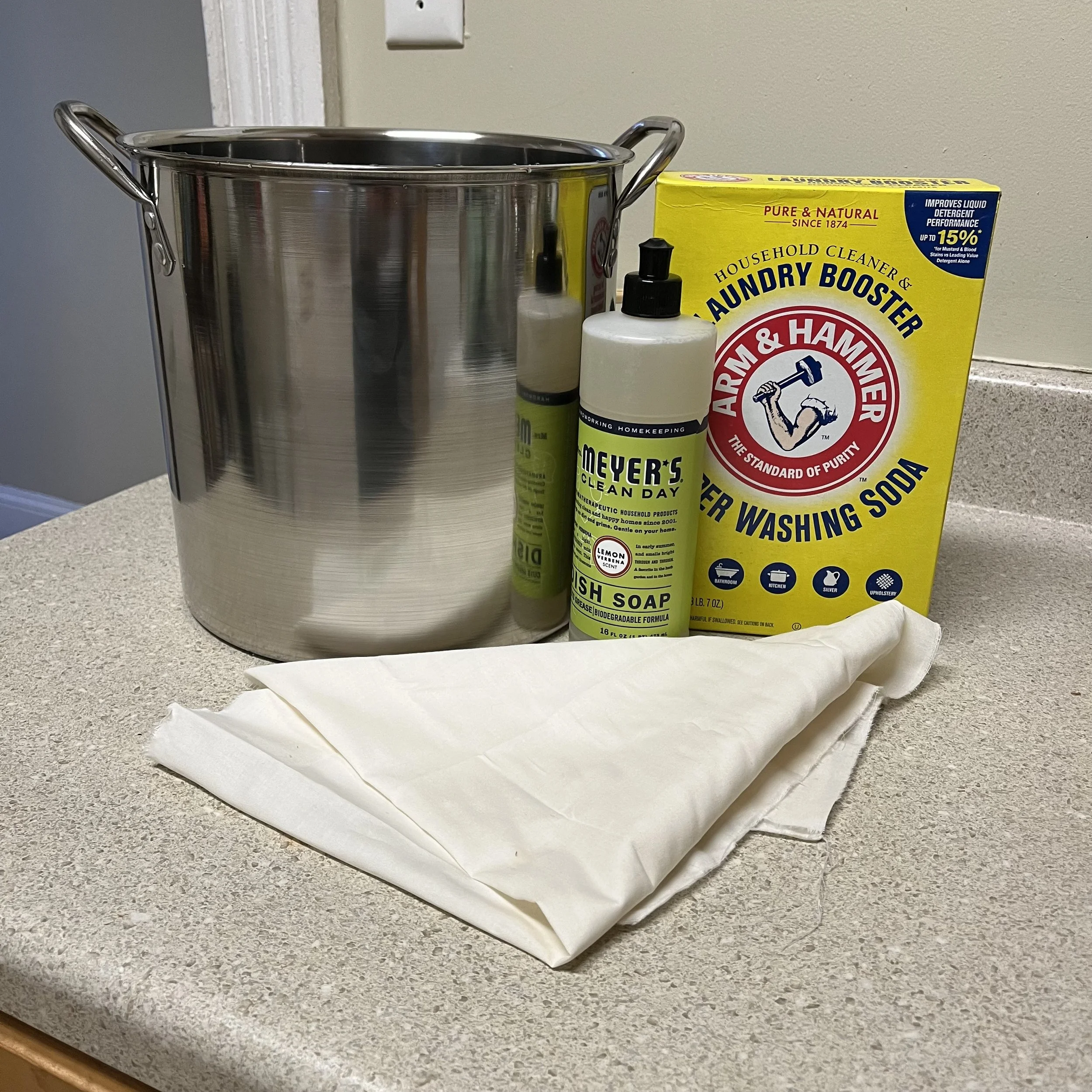
100% Cotton Muslin
Neutral pH dish soap
Large pot
Soda ash
-
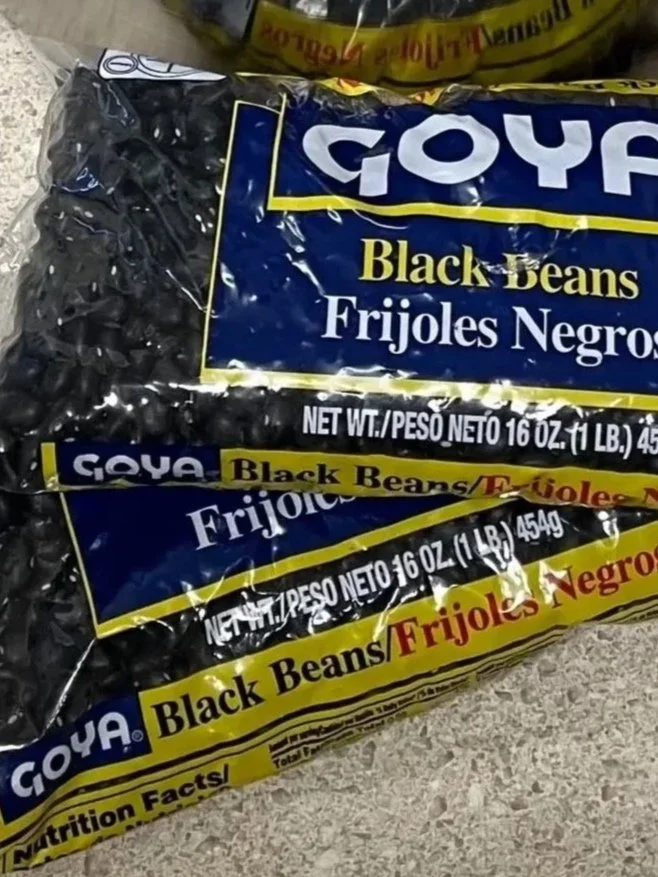
Black beans
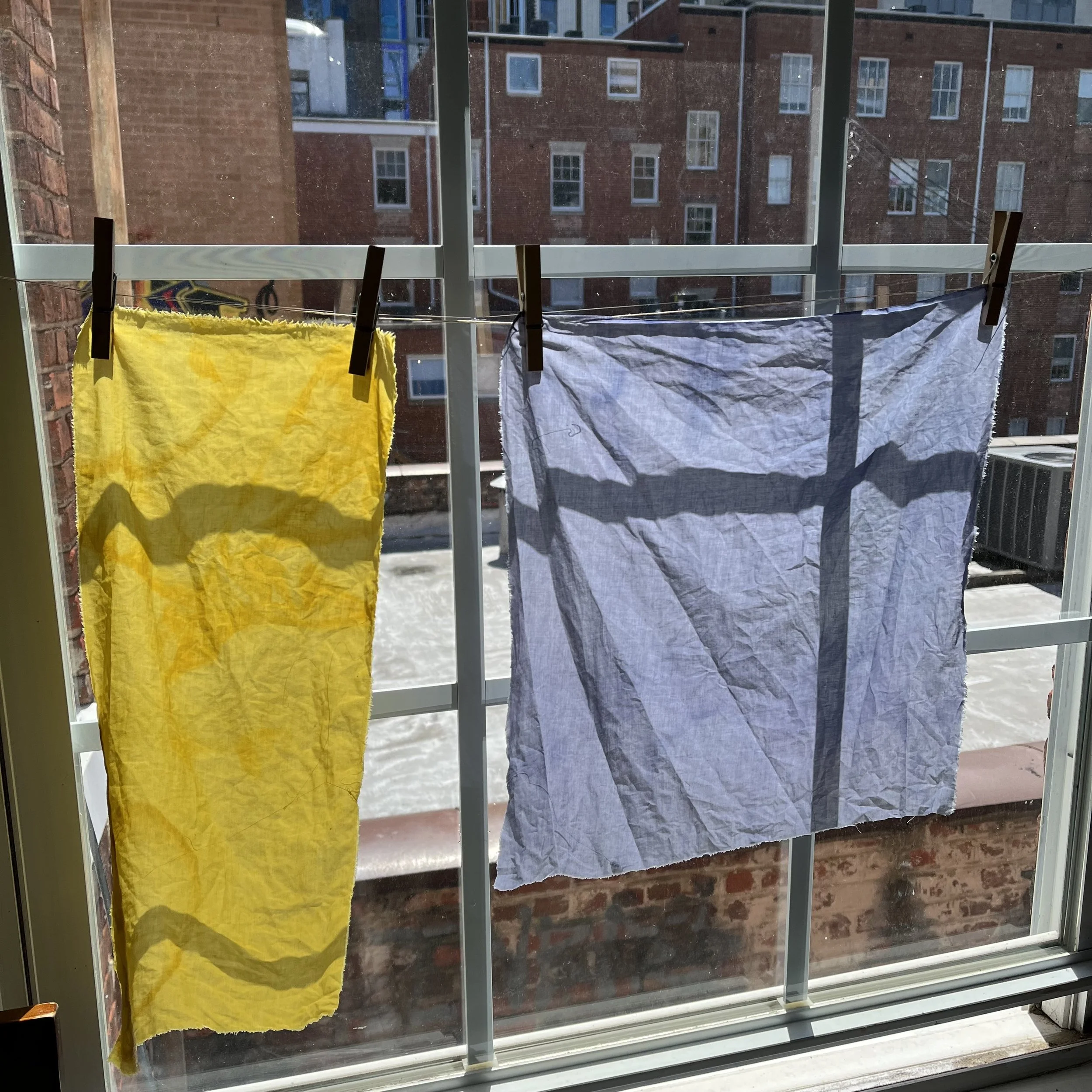
Results in a blue-ish gray to purple
-
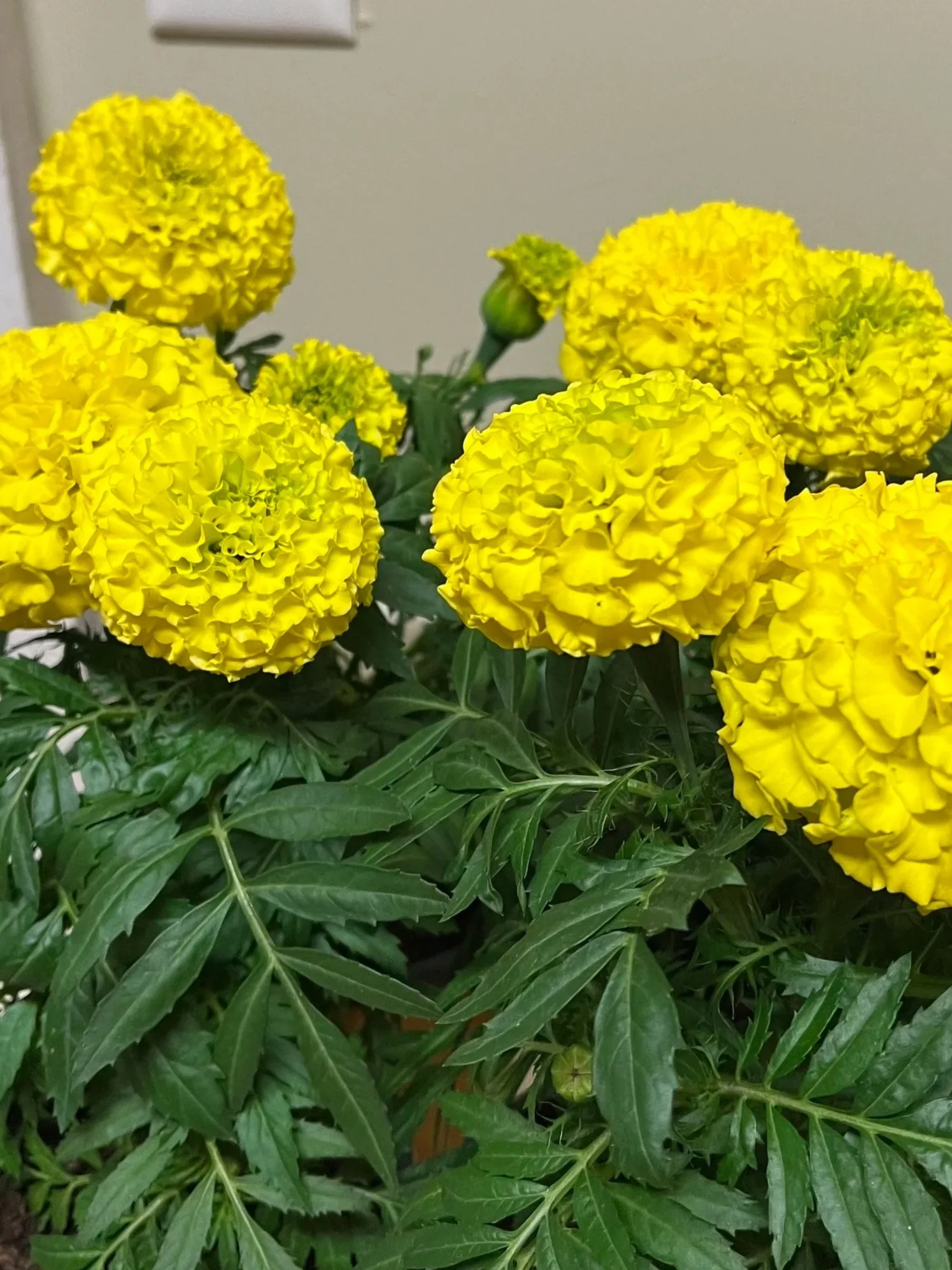
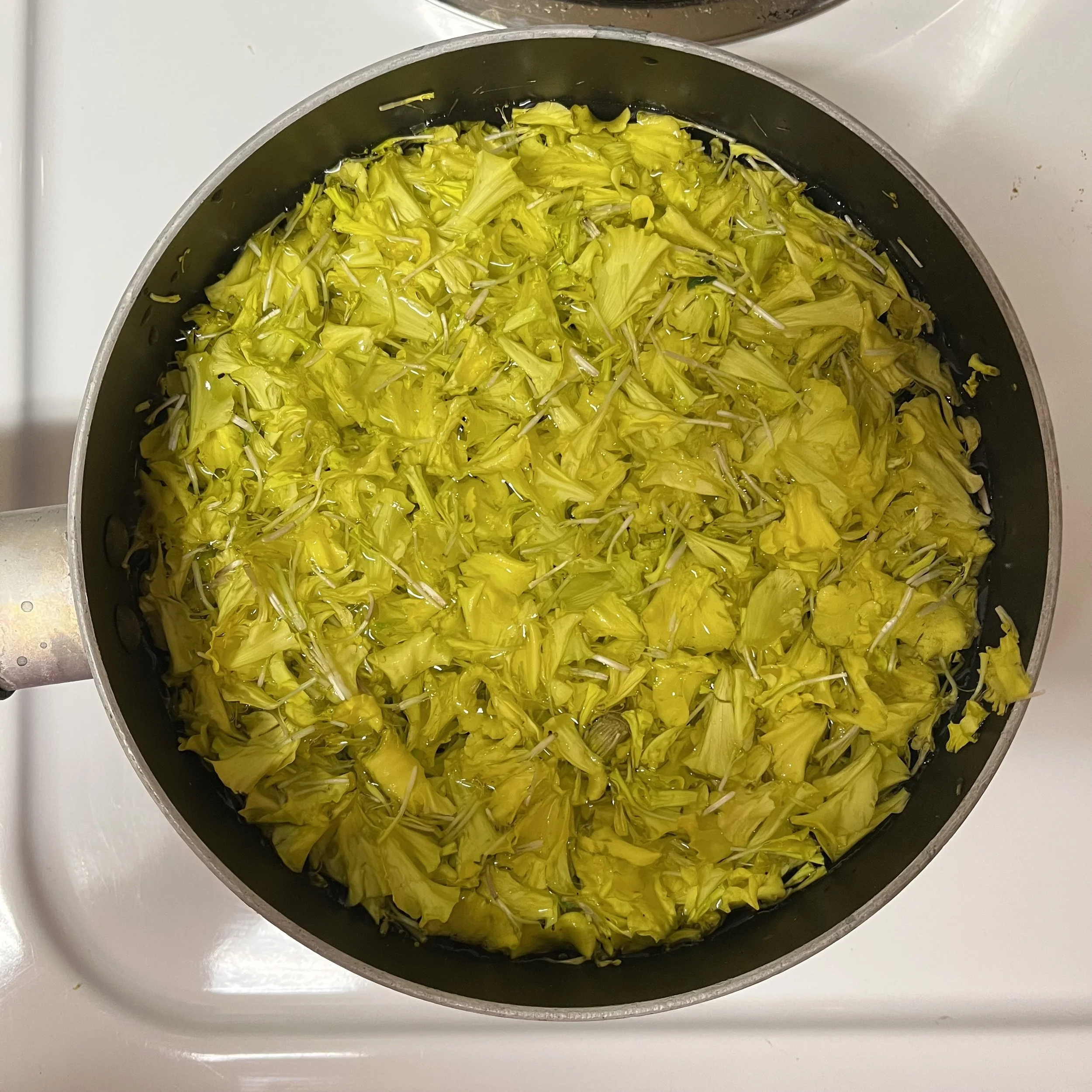
Marigold Flowers
Results in a yellow-orange-ish tint
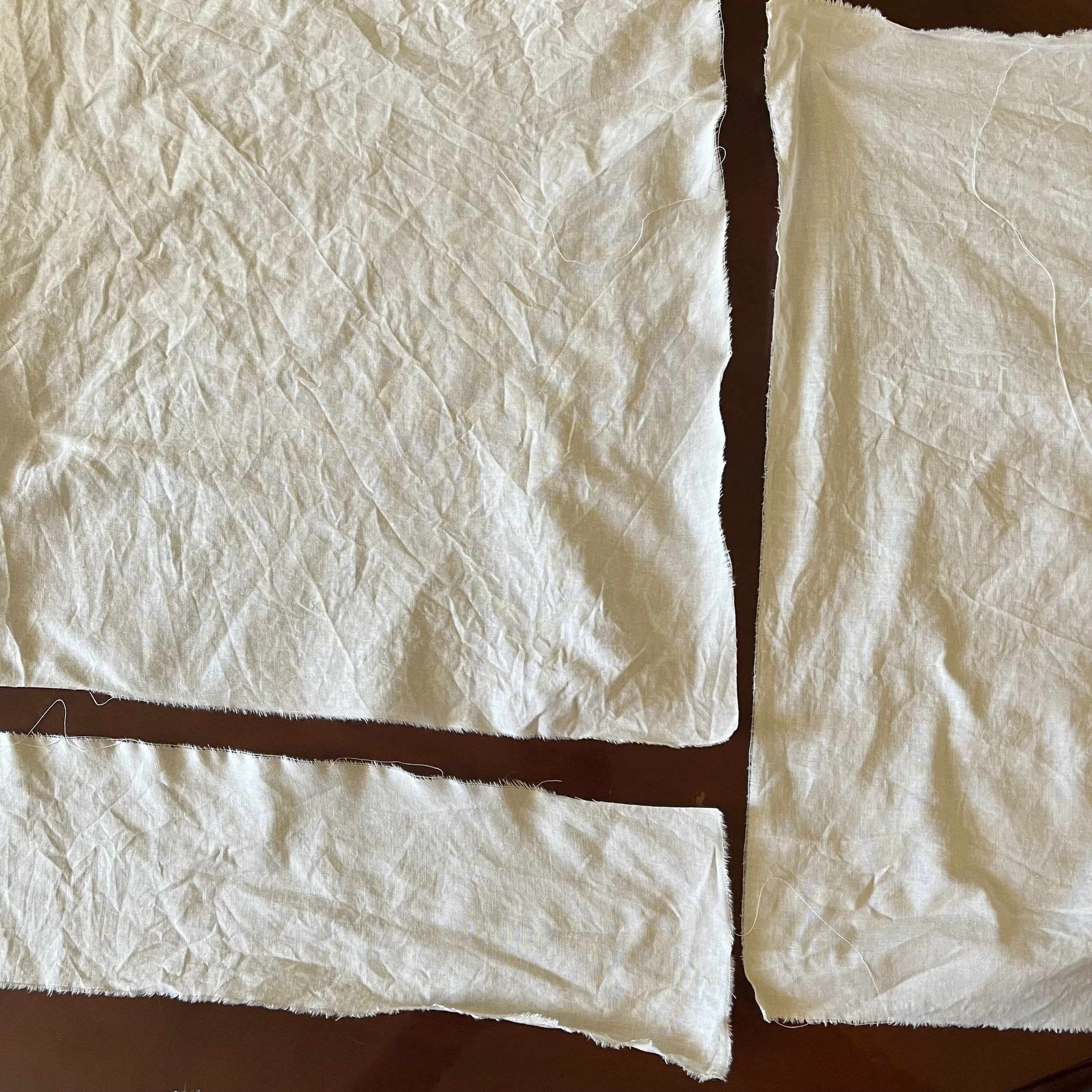
The Process
I created a textile sample by naturally dyeing cotton muslin with black beans and marigolds to produce two contrasting color panels. After preparing and dyeing the fabric, I connected the two sections using simple hand embroidery that added texture. This project allowed me to explore natural dye processes, experiment with color variation, and incorporate handwork to enhance the final surface.
-
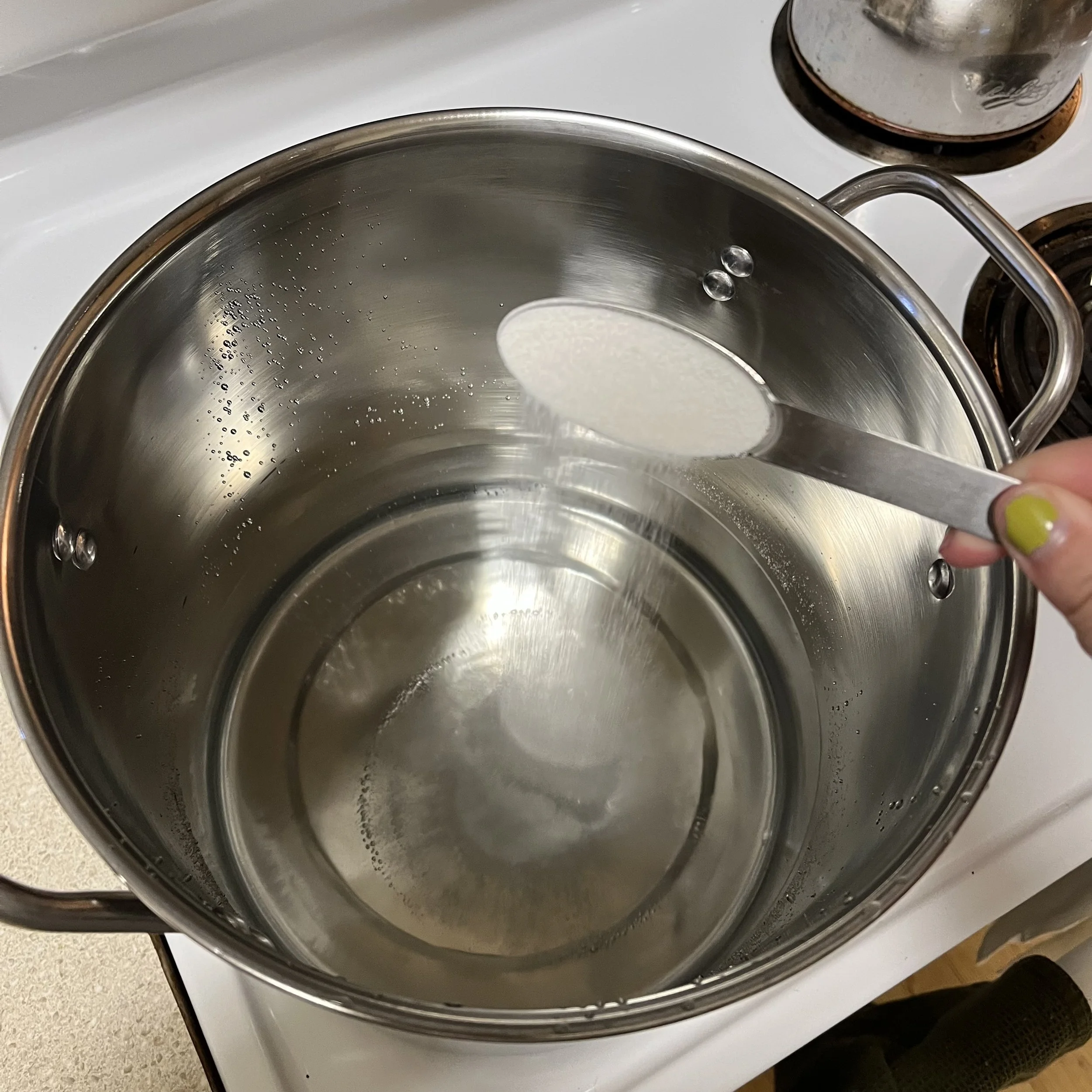
1. Prepare wash
Combine soap and soda ash in a large pot of hot water.
-
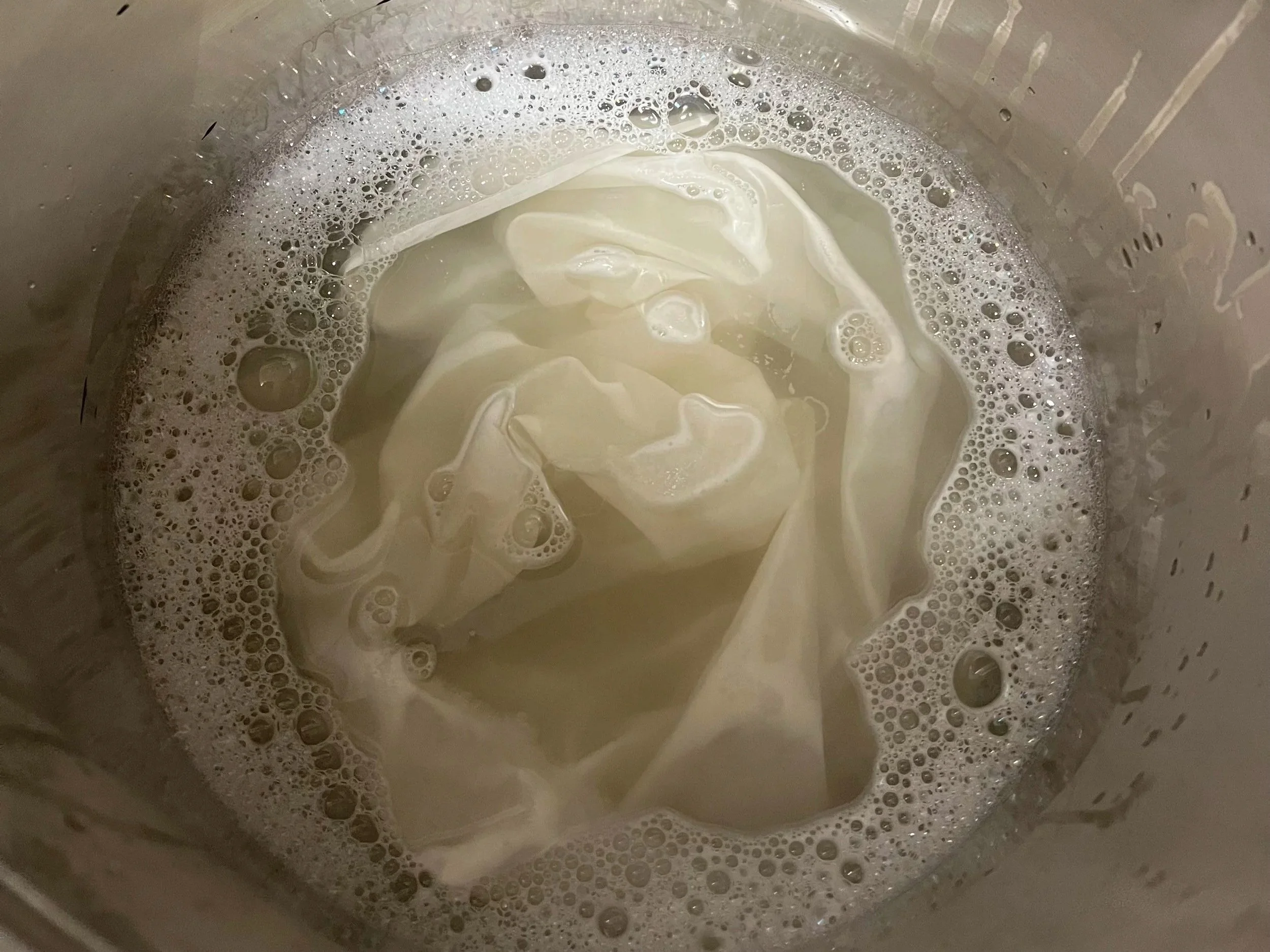
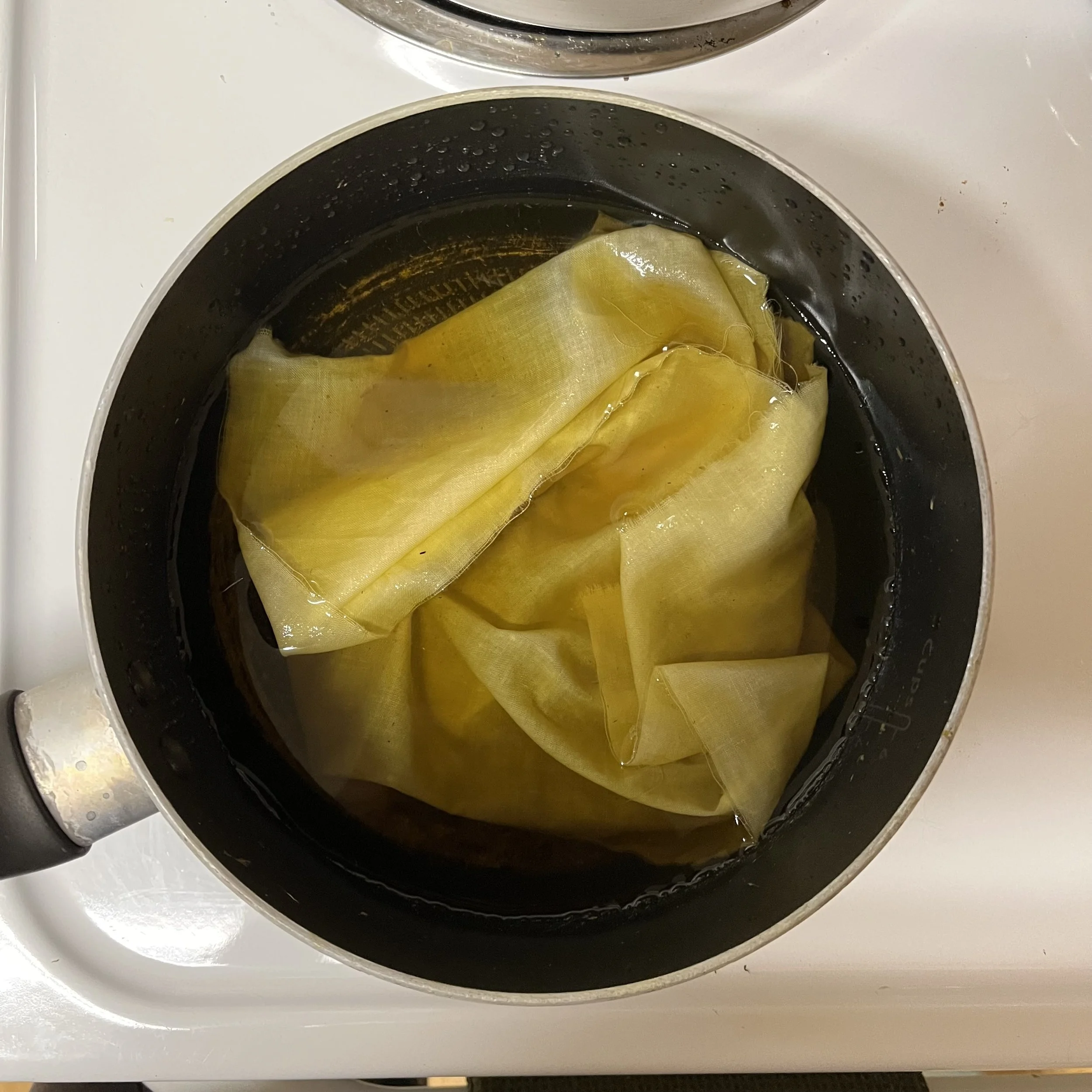
2. Wash Fabric
Boil fabric until water is yellow (around 2 hours)
Rinse then dry
-
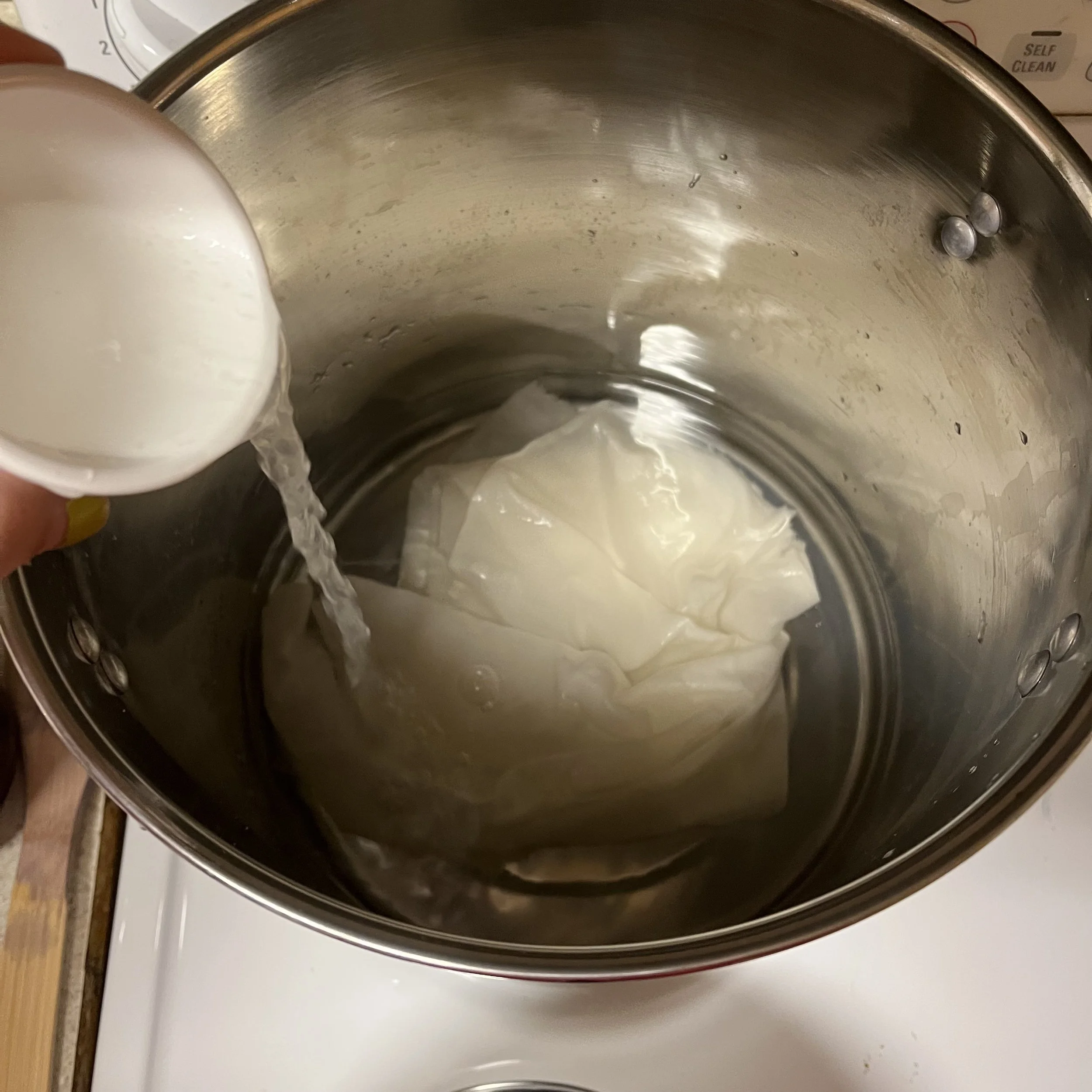
3. Mordant
In a pot, add the fabric and hot water. In a separate glass mix soda ash and water, then add to pot. In another glass, mix alum and water, then add to pot. Let mixture simmer for 1-2 hours.
Preparing the Dyes
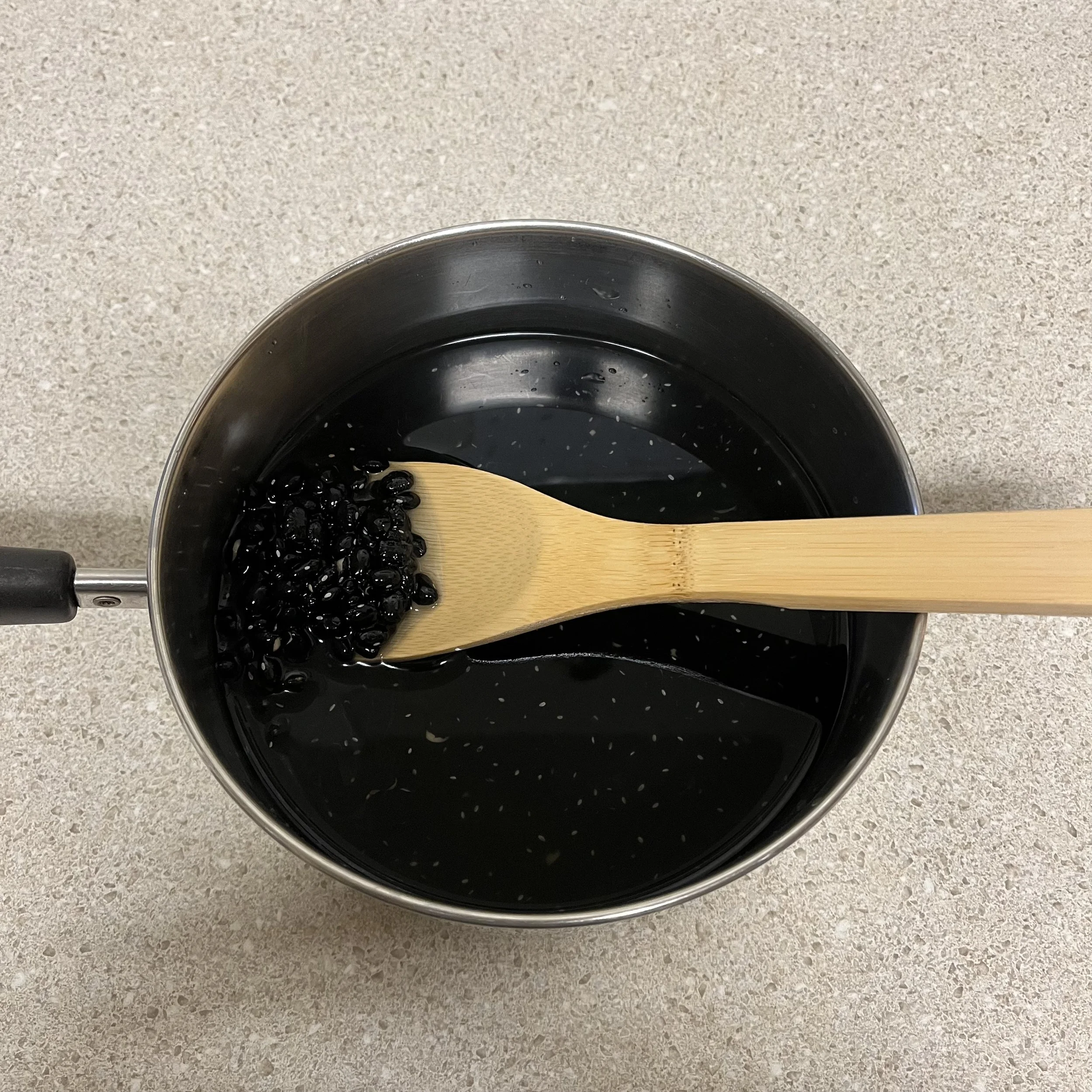
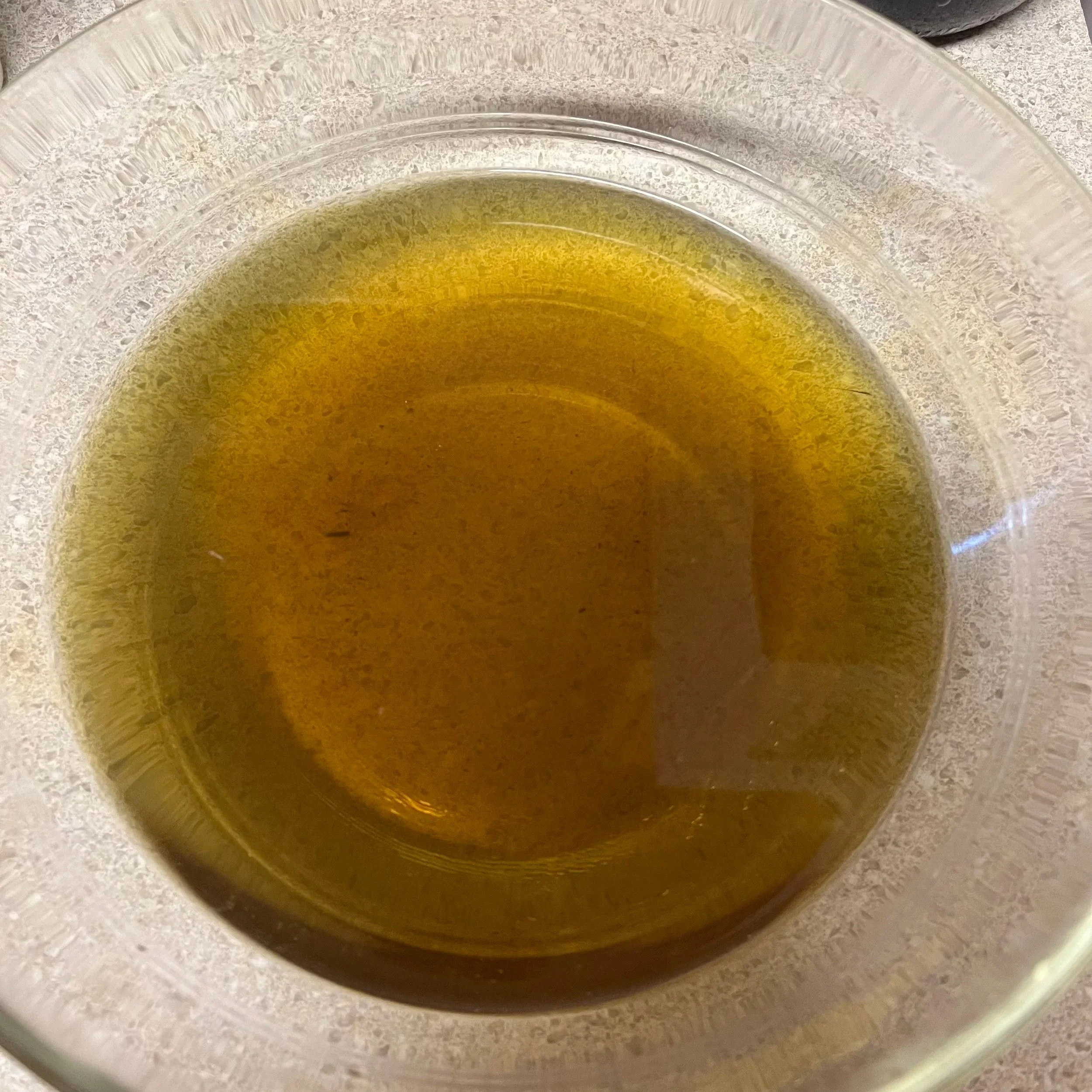
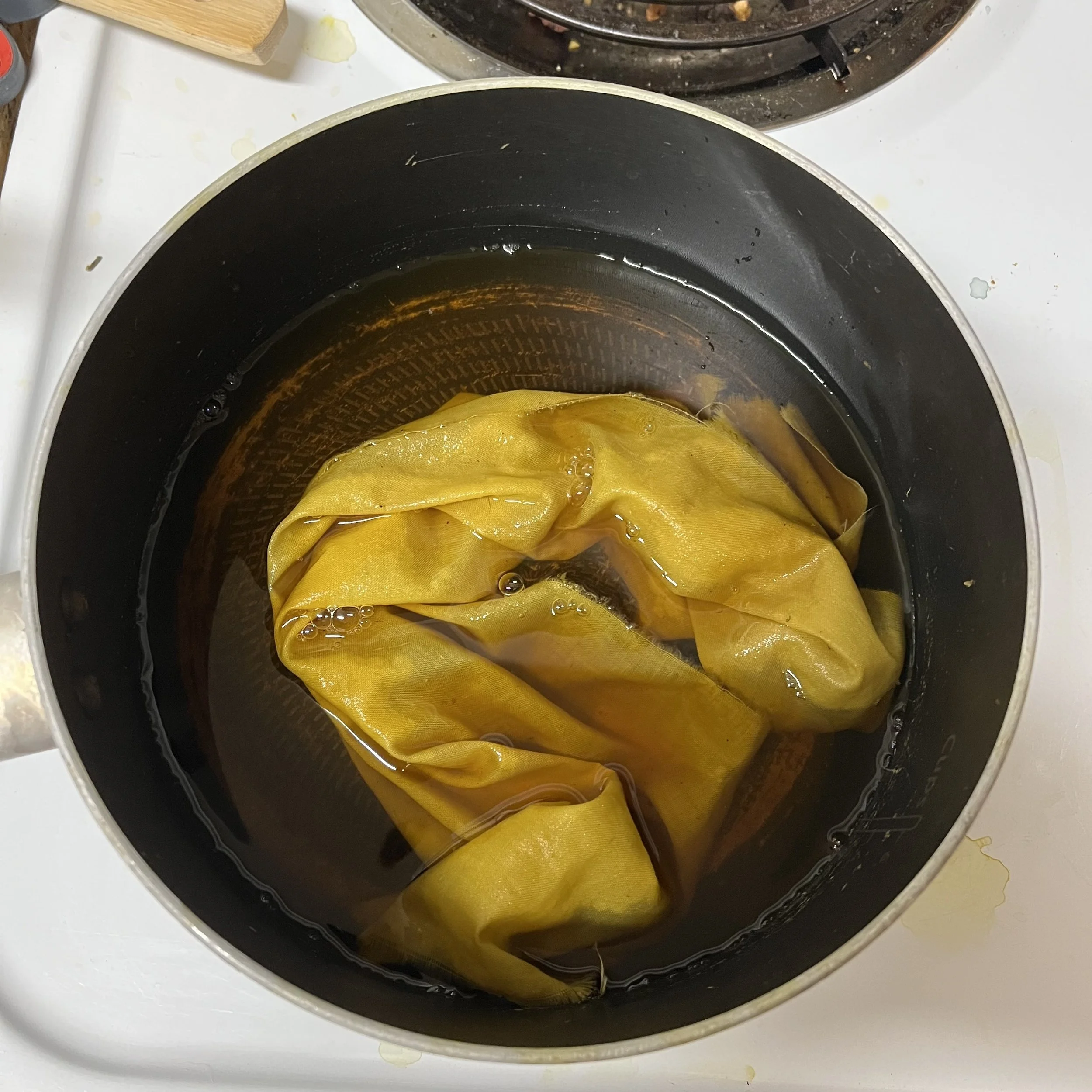
Simmer marigolds in equal parts water for 1 hour.
Let cool then strain, saving the dye bath.
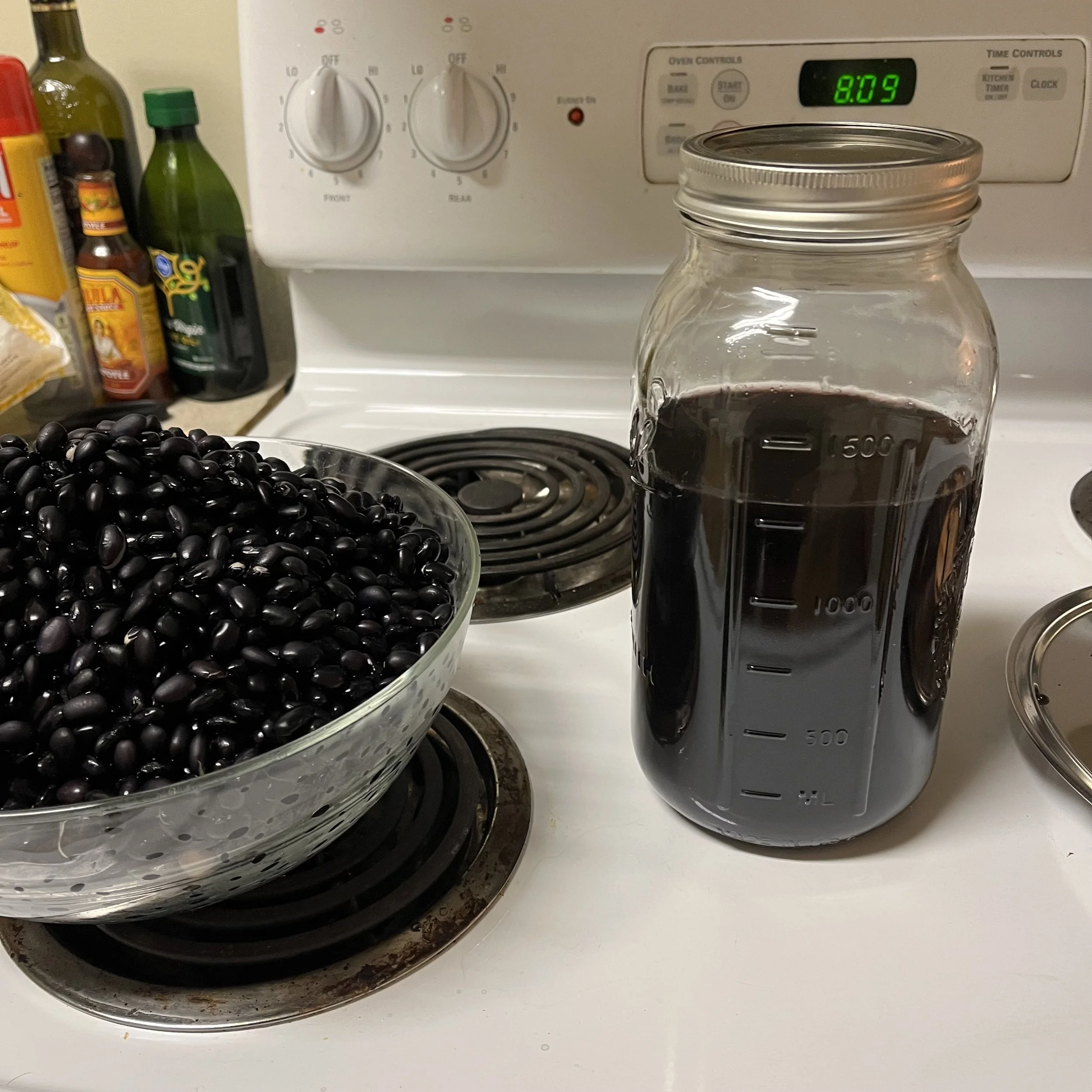
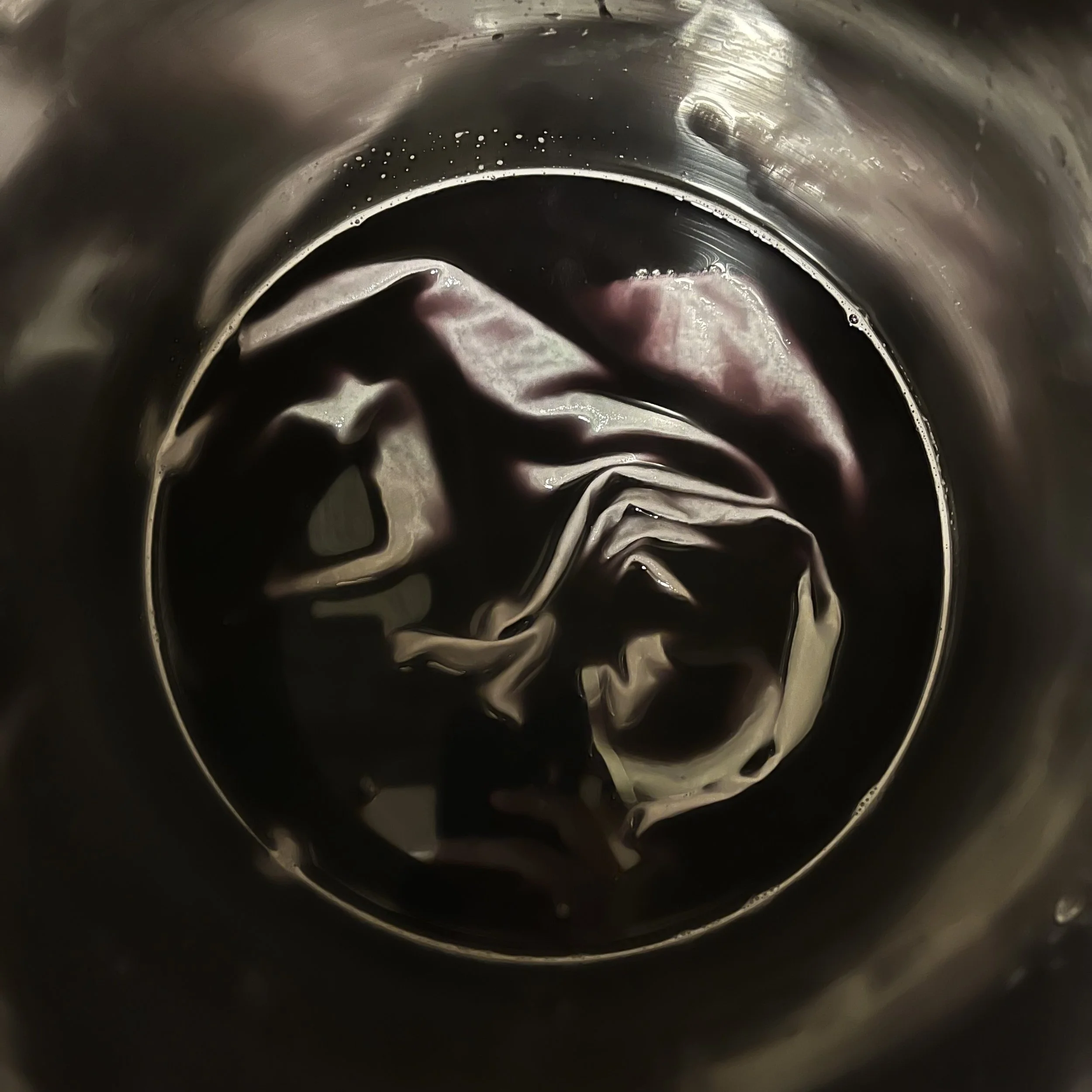
Soak black beans in equal parts water.
Let sit overnight, then strain to preserve the dye bath.
Dyeing the Fabrics
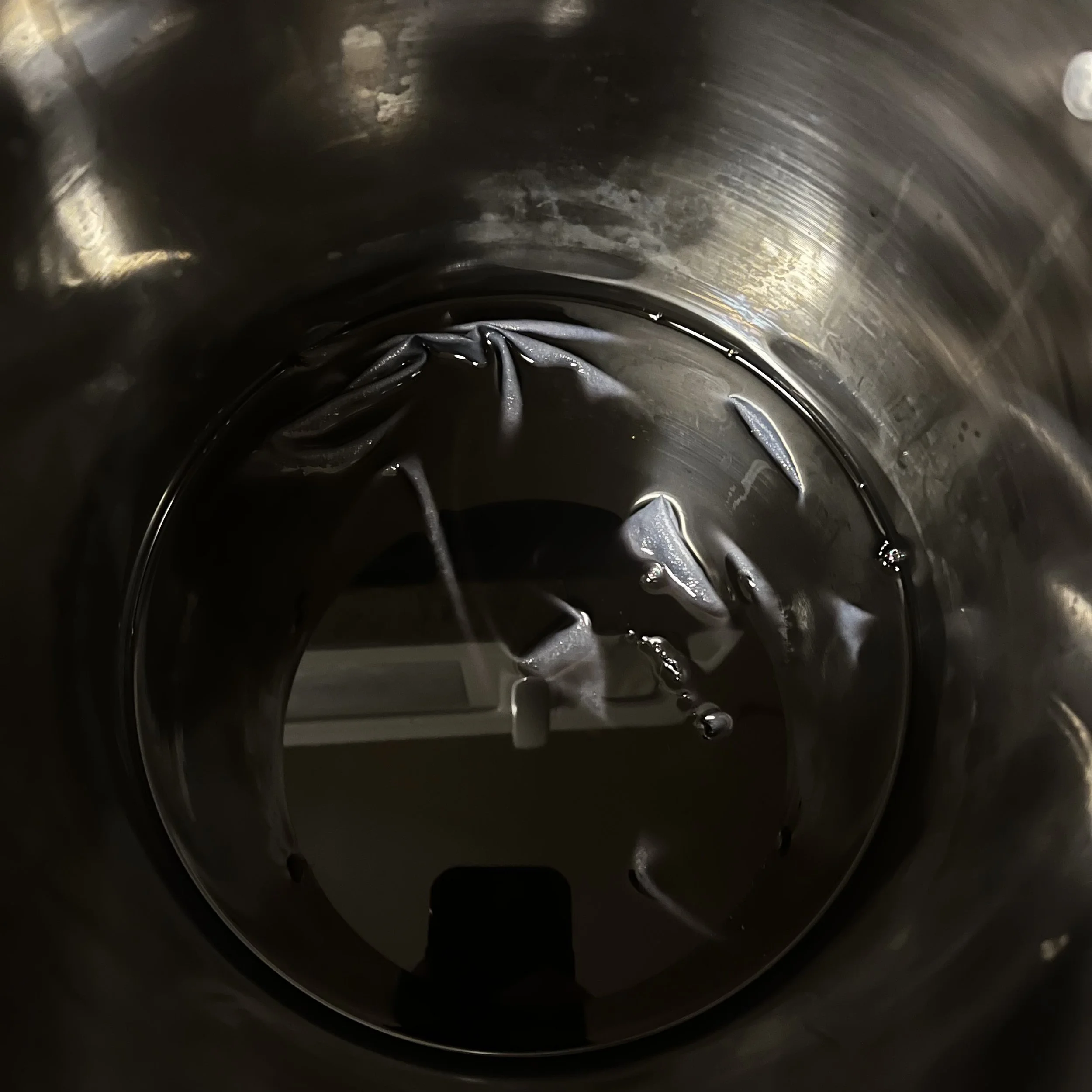
1. Submerge damp fabrics in the black bean and marigold dye baths.
2. Simmer for an hour.
3. Mix frequently.
4. After fabric reaches desired color, remove from the dye bath and rinse with cold water
Next Step: Sewing
-
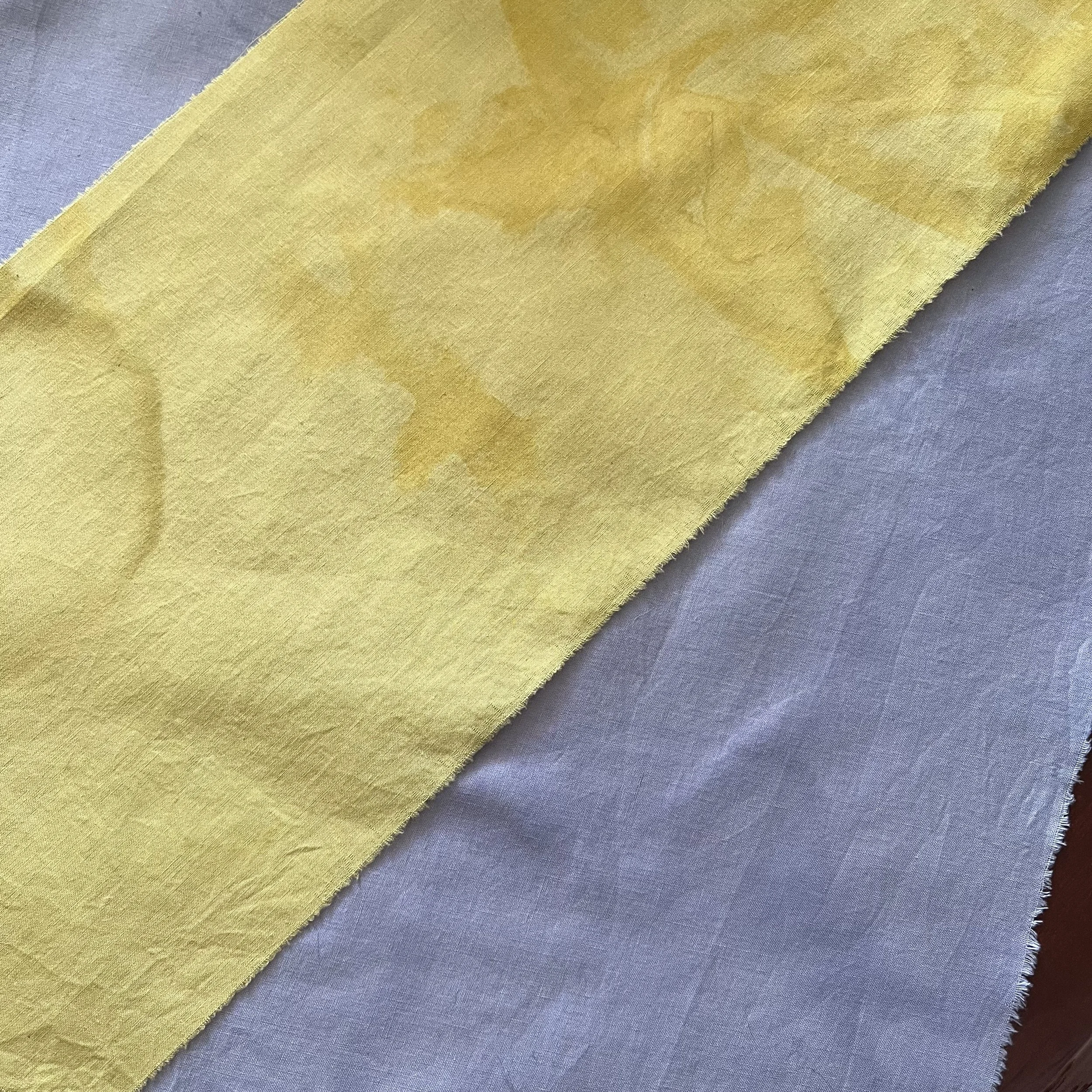
Iron
-
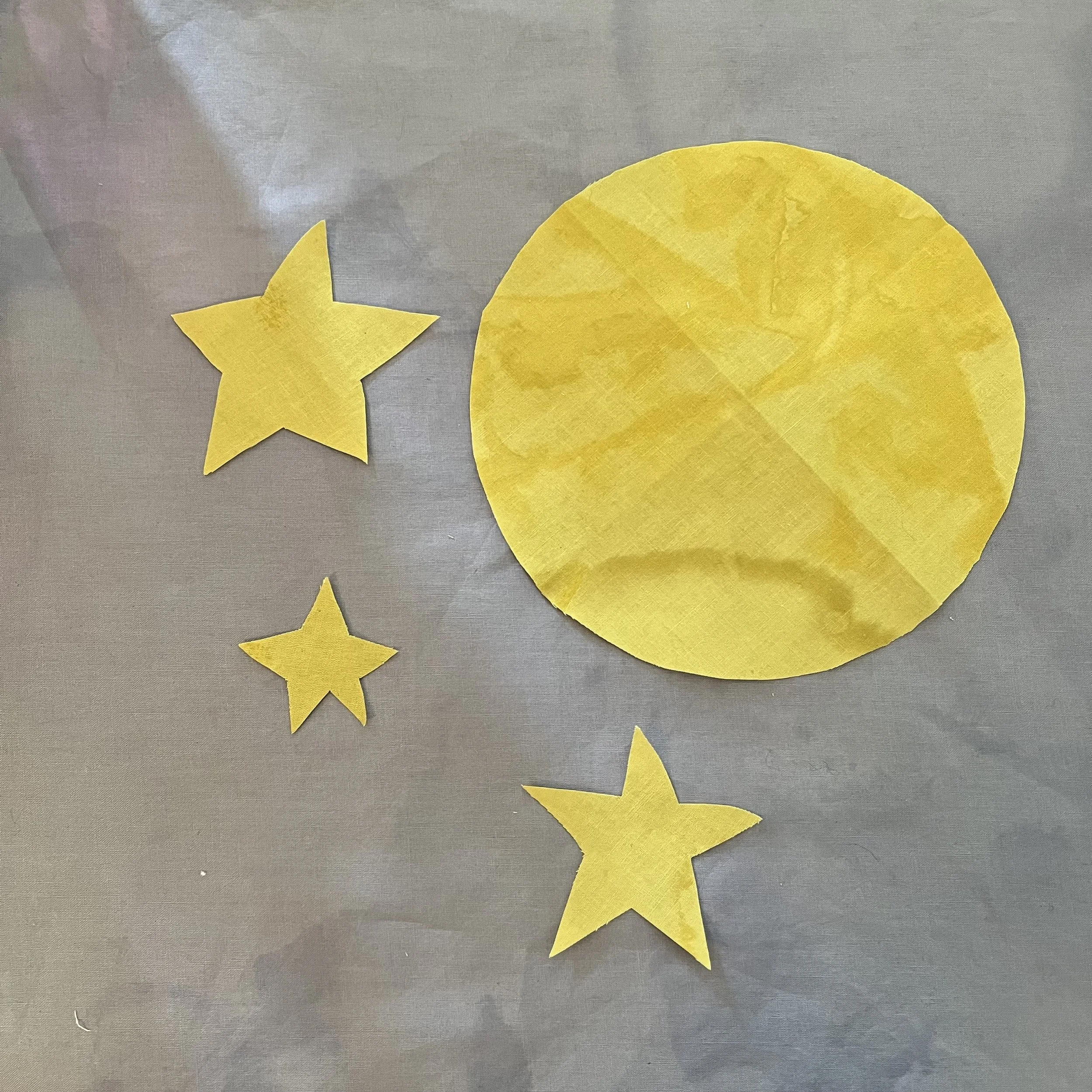
Cut Out Shapes
-
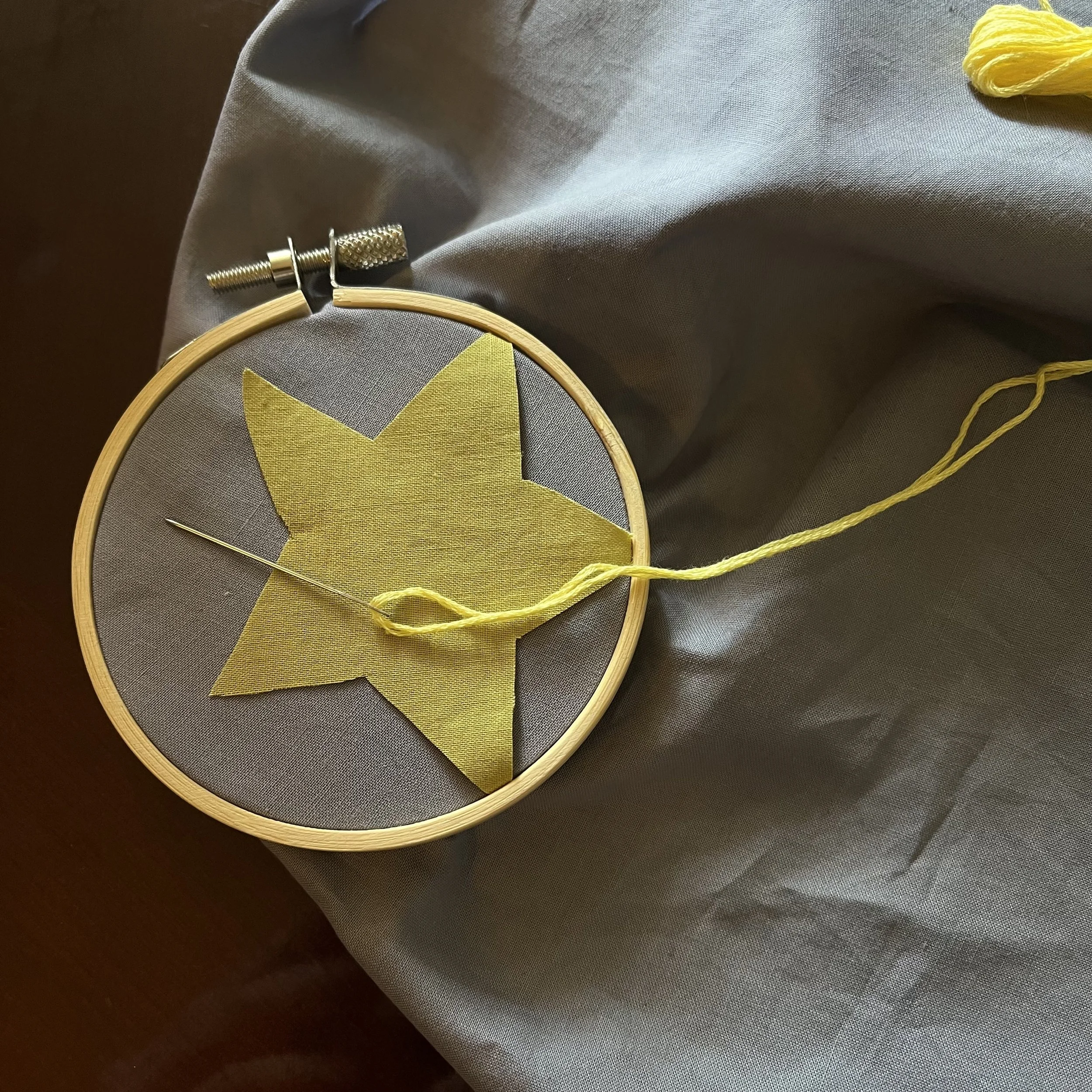
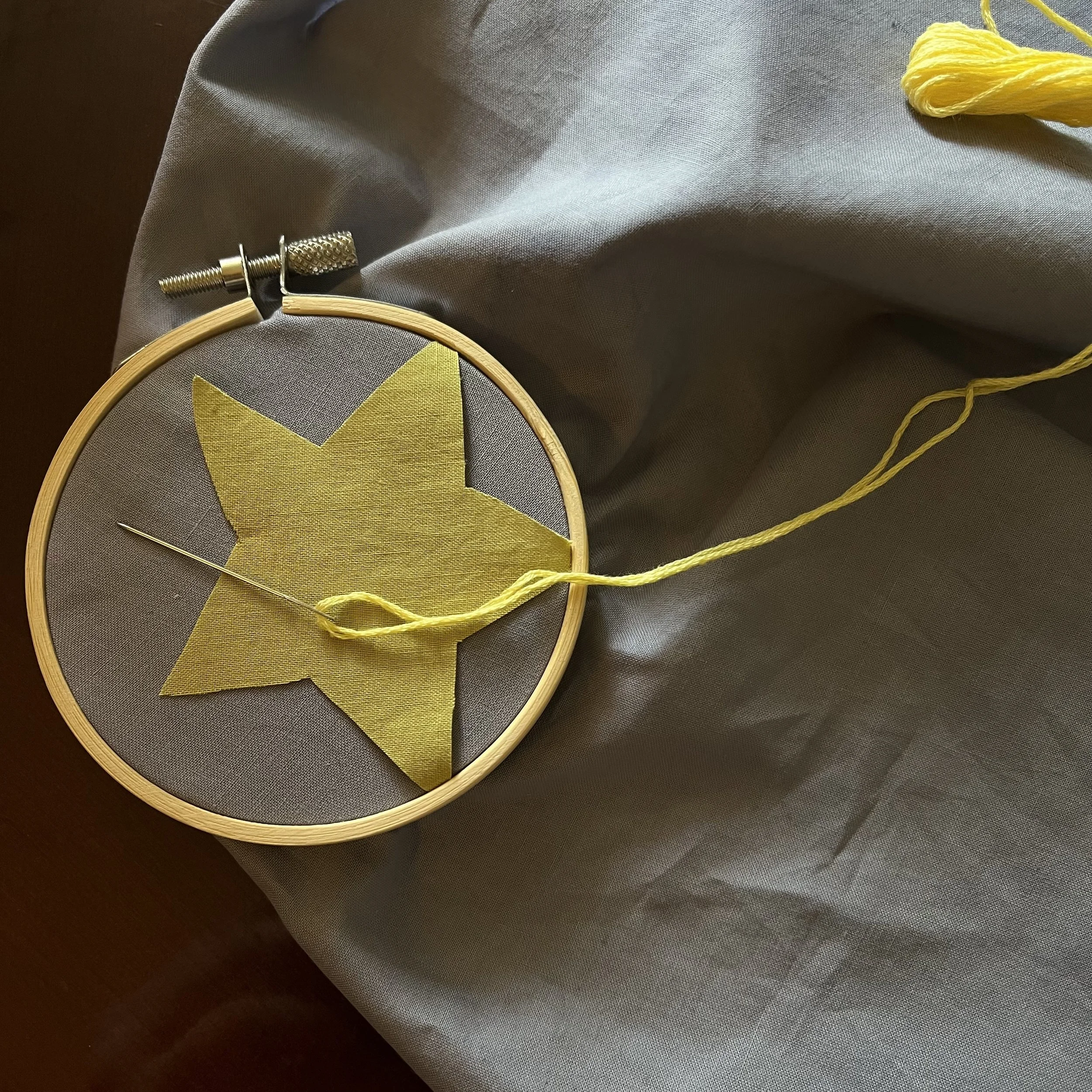
Sew Shapes Together
Skills I used
-
Through my Textile class, I was tasked with identifying key features of different fibers, yarns, and fabrics that provided me with the context to make this project.
-
This assignment gave us (the students) a lot of freedom to create something that aligned with our interests.
-
At times, my project seemed to differ from the expected results but through my past knowledge, I was able to explain and justify the changes
-
This project was not able to be done last minute due to the time allotments for certain parts of the process. I had to act accordingly and complete the assignment well before the due date.
-
While I had the freedom to choose how I manipulated the fabric, I still had to ensure it followed the guidelines and made sense for the assignment.
-
The skills regarding dyeing were all the result of tutorials and trial and error that I initiated myself.
Final Product
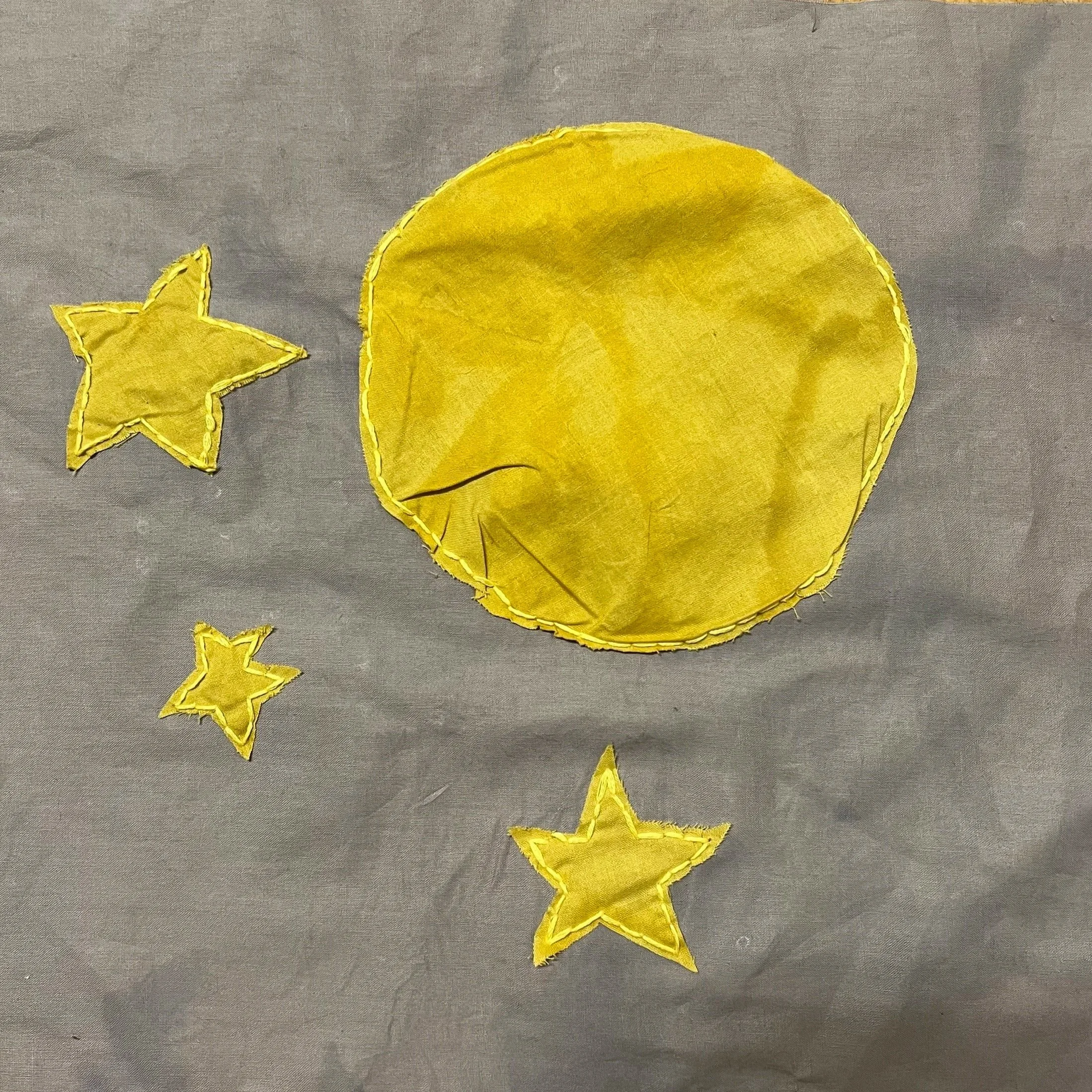
The project taught me how different natural dyes react to cotton muslin, how to control color intensity through timing, and how handwork can enhance the visual storytelling of a textile sample. I learned that natural dyeing requires patience, testing, and adaptability, and I gained a deeper appreciation for slow textile processes.